
-

750kg Platform Rating
That's about 10 people standing on it at once.
-

NATA Lab-Tested
Tested by Alfa Test, an independent accredited lab, not us.
-

2x+ Safety Margin
Rated for 750kg. It held strong past 1,540kg before any sign of stress.


What Was Tested
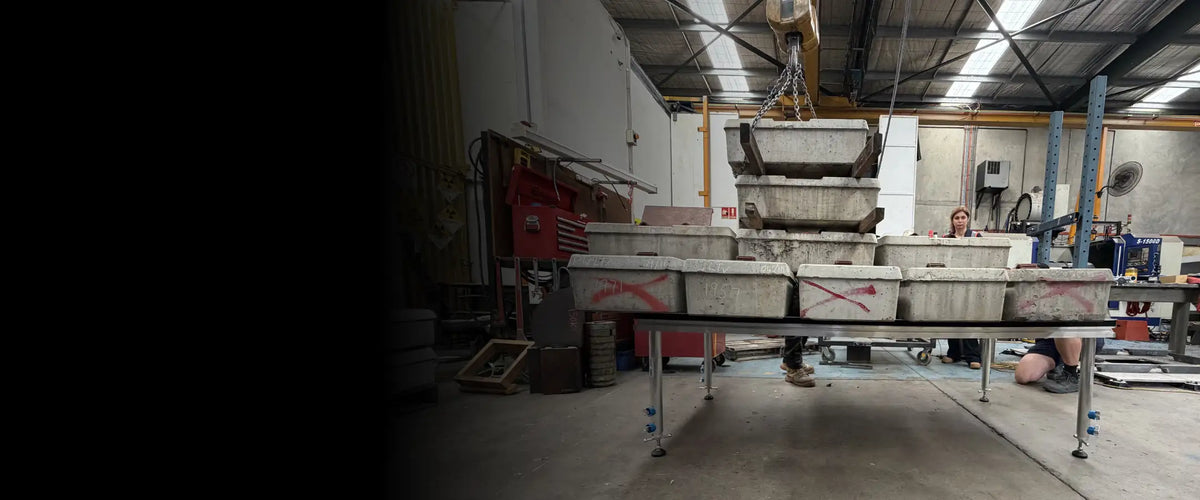
In short, we tested the exact platform you'd receive, not a prototype or a computer model.
The testing was carried out on an actual Titan AV 2 × 1 m portable stage platform, configured exactly as supplied for customer use.
The platform was assessed under controlled laboratory conditions to evaluate how it behaves under realistic load scenarios.
The test included:
- A real 2 × 1 m Titan AV stage platform
- Adjustable leg heights set to 600 mm and 1000 mm
- Load applied evenly across the entire surface
- Deflection (flex) was measured at the centre of the platform under load
- Overall stability observed visually throughout testing
Real product. Real loads. Measurable results.

Results at a Glance
This is what matters most.
Under controlled laboratory testing, the Titan AV stage platform demonstrated:
✔️ Minimal deflection under normal service loads
✔️ Return to level after unloading (no permanent sag recorded)
✔️ No structural failure of the aluminium frame
✔️ Predictable behaviour at increased leg heights, where stability — not strength — becomes the governing factor.
In simple terms:
The platform bends slightly under load (as all stages do), then springs back to level once the load is removed — exactly what you want to see in professional staging.

What This Means in Real Use
Engineering numbers only matter if they translate to real scenarios.
Based on the testing, Titan AV stage platforms are well suited to common applications such as:
- Lecterns and presenters
- School assemblies and presentations
- Corporate panels and conferences
- AV equipment and operators
- Light performance and staged activity
The testing confirms that the platform behaves as expected under service conditions — with controlled deflection and stable support.
FAQs
What is the Safe Working Load (SWL) of the stage platform?
What is the Safe Working Load (SWL) of the stage platform?
The Safe Working Load (SWL) — the recommended maximum working weight under normal conditions — for the Titan AV 2 × 1 m stage platform is 750 kg, when used in accordance with Titan AV installation guidelines and approved configurations.
This rating is supported by:
- Independent TÜV certification, and
- Local laboratory load testing conducted in Queensland, which assessed deflection, stability, and behaviour under increasing load.
The SWL represents a conservative working limit intended to ensure:
- Controlled deflection
- Stable performance
- Long-term durability
- An appropriate safety margin in real-world use
Always ensure the stage is installed correctly, with suitable leg height, support configuration, and evenly distributed load.
Was the testing carried out on a real Titan AV stage platform?
Was the testing carried out on a real Titan AV stage platform?
Yes. Testing was conducted on an actual Titan AV 2 × 1 m portable stage platform, configured as supplied to customers.
The platform was tested with adjustable legs at two heights (600 mm and 1000 mm), using evenly distributed loads applied across the full surface.
No simulations or theoretical models were used.
Who conducted the testing?
Who conducted the testing?
All testing was carried out by Alfa Test, an independent, accredited Australian laboratory in Queensland.
The testing assessed deflection, stability, and behaviour under increasing load.
Does some movement mean the stage is unsafe?
Does some movement mean the stage is unsafe?
No. A small amount of movement is normal and expected in all stage platforms.
Professional staging is designed to flex slightly under load and then return to level once the load is removed. Excessive stiffness can actually transfer stress to joints and fixings.
The key factor is controlled deflection — movement that remains within accepted serviceability limits (guidelines that control movement and comfort rather than structural failure) and does not cause permanent deformation.
What happens to the stage after the load is removed?
What happens to the stage after the load is removed?
After unloading, the stage platform returned to level with no measurable permanent sag recorded.
This indicates elastic behaviour — the platform bends slightly under load and then recovers, which is a key indicator of good stage performance and long-term durability.
Why does stage height affect performance?
Why does stage height affect performance?
As stage height increases, leverage on the legs increases as well.
This means that at greater heights, stability becomes the governing factor rather than material strength. This behaviour is normal for all adjustable stage systems and is why correct leg selection and installation are important.
What Does “L/200” Mean?
What Does “L/200” Mean?
You may see deflection limits written as L/200 or L/250 in engineering contexts.
This can sound technical, but the idea is simple.
L refers to the span of the stage deck (the distance between supports).
L/200 sets a limit on how much the platform is allowed to bend under normal working load.
For a 2.0 m stage deck:
- L/200 equates to a maximum of 10 mm deflection
This controls feel, not failure. It doesn’t mean the stage is close to breaking — it means movement is kept within a range that:
- Feels solid underfoot
- Isn’t visibly alarming
- Won’t damage the deck over time
Independent testing of the Titan AV stage platform demonstrated controlled deflection within accepted serviceability limits under normal working loads.
Can I use this testing for school or council procurement?
Can I use this testing for school or council procurement?
Yes. The full independent laboratory test report is available for download and can be used to support procurement reviews, risk assessments, and internal approvals.


